Broken Brika
Broken Brika
Broken Brika
Nov- Dec 2024

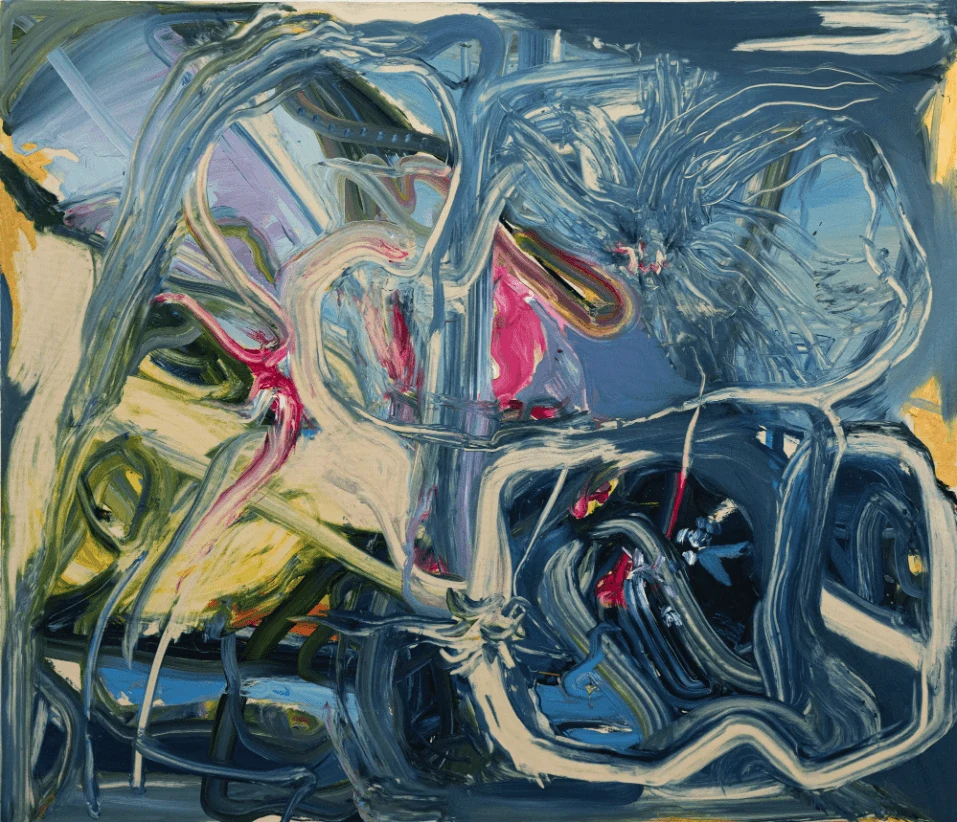
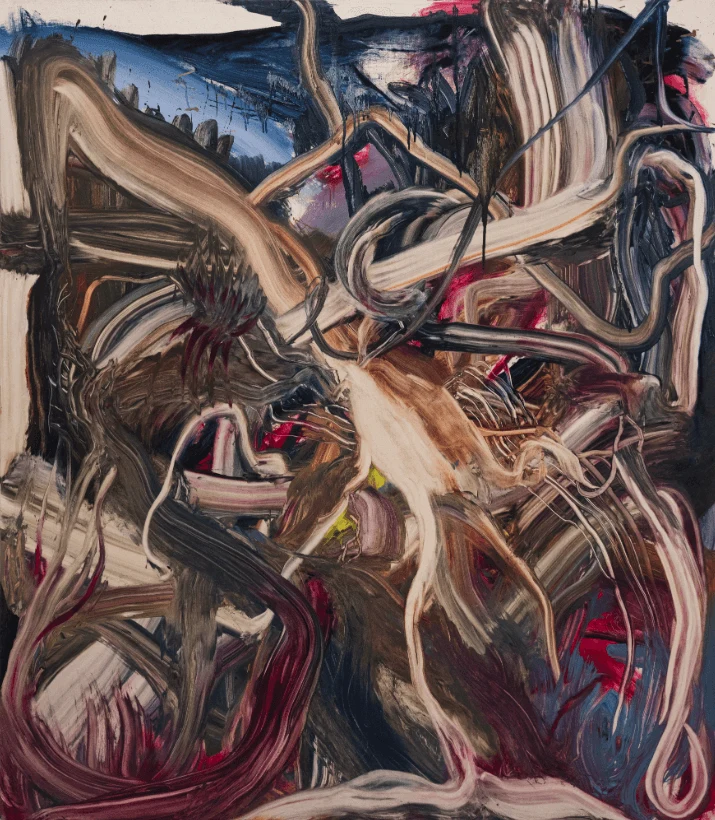
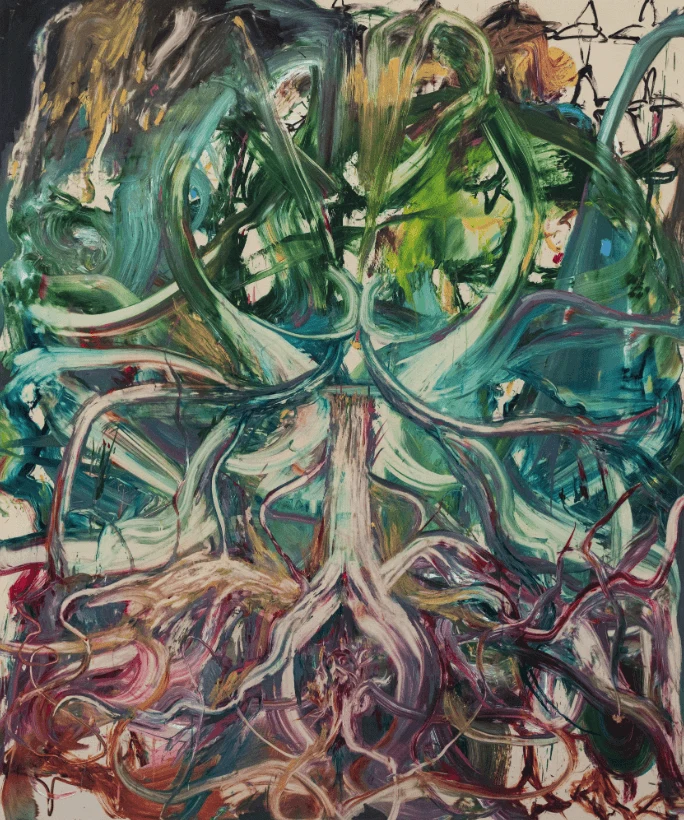
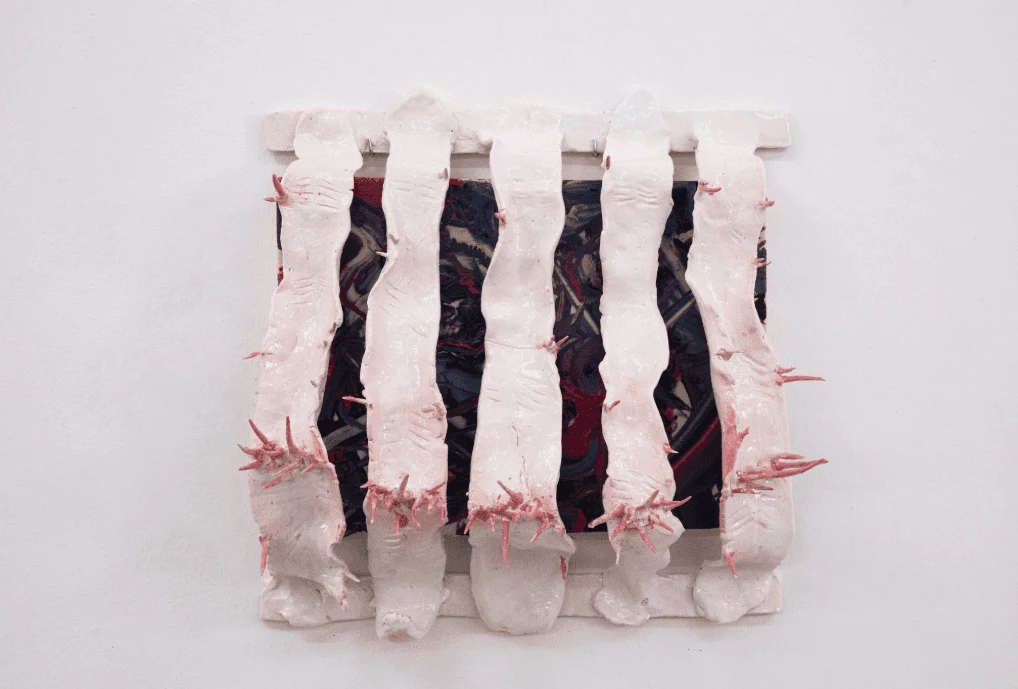
During his residency at l’Atelier Selma Feriani, the artist Jesús Crespo explores metamorphosis as an individual character through painting, channeling ambiguity and intrigue. On lubricated surfaces that he primes assiduously —an embryonic step in his process— the lines and shapes are not definitive; curvaceous, moist, elusive, fluid —at times retractable— they extend their edges to the borders of the canvas, enveloping us into an optical phenomenon that mirrors the occurrence of quicksand. In the midst of their fibrous entanglement, the compositions emit a synaptic signal; it sparks our imagination, stimulating our gazes, in all volition, to the ‘neuron’ (multiple contortions) of the paintings, which are neither determinate nor entirely alien. They are an indefinite geometry of an organism, as if magnified under a microscopic device, slithering the frames through biomorphic abstraction. It is akin to being absorbed in the succulence of a spider’s web, set against opaline backgrounds that Crespo deliberately spares when spreading his paint, like a stretched parhelion. Adding as much as subtracting his paint with his hands, his technique of corporeal and gestural engagement is imbued with an almost sculptural, hence multi-dimensional, tension, veering away from flatness, yet never inciting a visual surplus. The textures emerge as palpable, although they obey the harmonious order that the paintings neatly map. Crespo however does not rehearse his subject matter beforehand, he embraces a “predisposition to let things happen”. Whether concealing or unveiling, shrouded in hermetic or psychological wrappings, he reveals that the references emerge as an afterthought; they are accumulated clues of what the optic unconsciously retains. Fascinated by the frontality, graphism and symmetry of the Tunisian doors, his surfaces do not replicate but allusively dialogue with them, conjuring sites that mark the ebbing between confinement and tranquillity. His work, however, does not impart any cultural associations. He therefore elicits our receptiveness, for we must approach his paintings without premeditation. During his time in Tunisia, the artist engaged with the Centre National de la Céramique D’Art Sidi Kacem Jelizi, where he experimented with ceramics as a natural extension of his painting practice. Inspired by the Tunisian window bars he encountered, the artist’s ceramic entities appear as appendages to his paintings, draped across them like talismans or mid-scale armor, animated by a protective alignment. The sharp, thorny extensions—a leitmotif that is recurrently echoed in both his paintings and ceramic explorations—oscillate within an unresolved duality; are they hissing in warning, or are they seductively beckoning us in? The access to the painting becomes veiled, its surfaces impenetrable or only partially perceptible through the hollowed, rectilinear creases. He denies us the liberty of formulating our own perception of what we are seeing, or of what is being obstructed from view, through the alternate openings and closings; how do we overcome this incapacitation? Should we seek the go-between, or peer through the implied lid that leads us into uncertainty? Such is the motive behind his metamorphic shapes: to “extract the feeling that triggers us”, to unsettle the ominous gravity, and to give precedence to the pleasure of disorientation. Racha Khemiri. Tunis. November 2024.
During his residency at l’Atelier Selma Feriani, the artist Jesús Crespo explores metamorphosis as an individual character through painting, channeling ambiguity and intrigue. On lubricated surfaces that he primes assiduously —an embryonic step in his process— the lines and shapes are not definitive; curvaceous, moist, elusive, fluid —at times retractable— they extend their edges to the borders of the canvas, enveloping us into an optical phenomenon that mirrors the occurrence of quicksand. In the midst of their fibrous entanglement, the compositions emit a synaptic signal; it sparks our imagination, stimulating our gazes, in all volition, to the ‘neuron’ (multiple contortions) of the paintings, which are neither determinate nor entirely alien. They are an indefinite geometry of an organism, as if magnified under a microscopic device, slithering the frames through biomorphic abstraction. It is akin to being absorbed in the succulence of a spider’s web, set against opaline backgrounds that Crespo deliberately spares when spreading his paint, like a stretched parhelion. Adding as much as subtracting his paint with his hands, his technique of corporeal and gestural engagement is imbued with an almost sculptural, hence multi-dimensional, tension, veering away from flatness, yet never inciting a visual surplus. The textures emerge as palpable, although they obey the harmonious order that the paintings neatly map. Crespo however does not rehearse his subject matter beforehand, he embraces a “predisposition to let things happen”. Whether concealing or unveiling, shrouded in hermetic or psychological wrappings, he reveals that the references emerge as an afterthought; they are accumulated clues of what the optic unconsciously retains. Fascinated by the frontality, graphism and symmetry of the Tunisian doors, his surfaces do not replicate but allusively dialogue with them, conjuring sites that mark the ebbing between confinement and tranquillity. His work, however, does not impart any cultural associations. He therefore elicits our receptiveness, for we must approach his paintings without premeditation. During his time in Tunisia, the artist engaged with the Centre National de la Céramique D’Art Sidi Kacem Jelizi, where he experimented with ceramics as a natural extension of his painting practice. Inspired by the Tunisian window bars he encountered, the artist’s ceramic entities appear as appendages to his paintings, draped across them like talismans or mid-scale armor, animated by a protective alignment. The sharp, thorny extensions—a leitmotif that is recurrently echoed in both his paintings and ceramic explorations—oscillate within an unresolved duality; are they hissing in warning, or are they seductively beckoning us in? The access to the painting becomes veiled, its surfaces impenetrable or only partially perceptible through the hollowed, rectilinear creases. He denies us the liberty of formulating our own perception of what we are seeing, or of what is being obstructed from view, through the alternate openings and closings; how do we overcome this incapacitation? Should we seek the go-between, or peer through the implied lid that leads us into uncertainty? Such is the motive behind his metamorphic shapes: to “extract the feeling that triggers us”, to unsettle the ominous gravity, and to give precedence to the pleasure of disorientation. Racha Khemiri. Tunis. November 2024.